From 11 February, International Day of Women and Girls in Science, to 8 March, International Women’s Rights Day, Liryc shines a spotlight on the women who have made science what it is today. Through a series of portraits and interviews on key topics, discover these committed women in science.
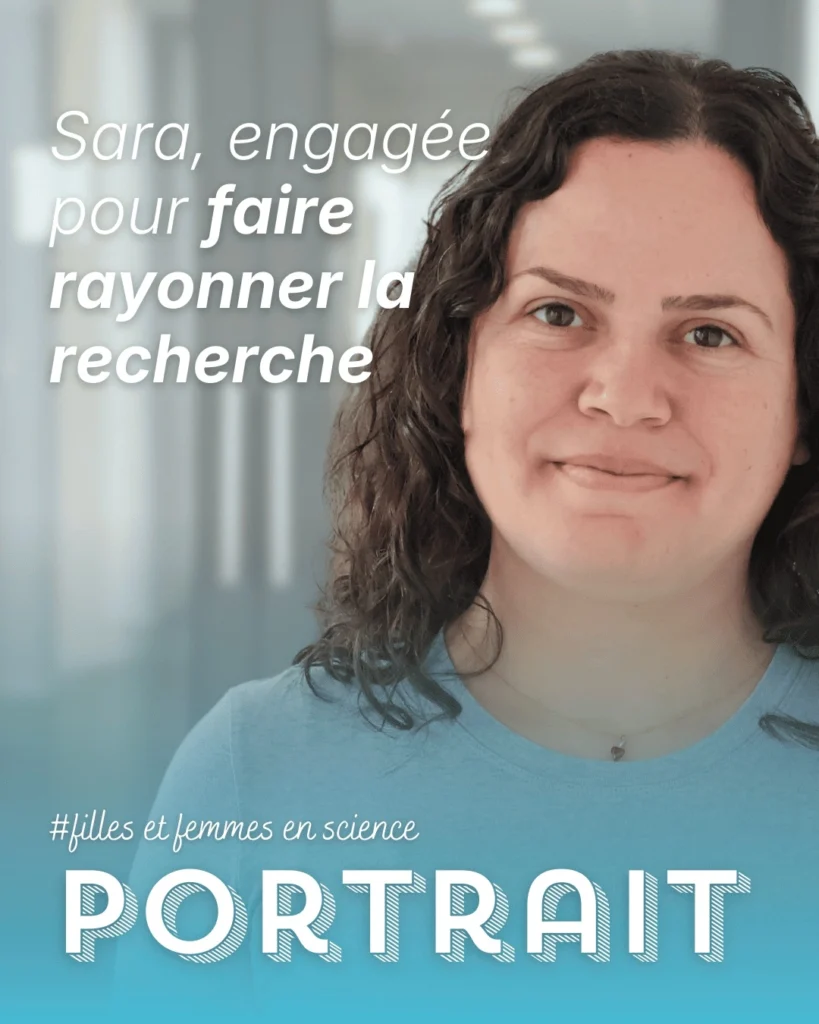
We open this series with Sara Zein. A research engineer in the Modelling division at IHU Liryc, Sara is also the architect of the CarpLab project, a website dedicated to the visibility and accessibility of her team’s work.
Hello, Sara!
Can you tell us about your career path?
My journey began in Lebanon, my country of origin. Passionate about science, especially physics and biology, I completed my secondary and university education there before moving to France to pursue my PhD. I specialised in particle physics, with a specific medical application: radiotherapy for cancer treatment and the study of radiation on biological materials, cells and DNA.
After completing a postdoctoral fellowship at Weill Cornell Medical College in New York, where I worked on PET imaging applied to Alzheimer’s disease, and spending four years at the CNRS in Bordeaux as a postdoctoral researcher and temporary teaching and research assistant, I joined the Liryc Institute and Edward Vigmond’s modelling team.
Today, I wear two hats: engineer for the development of cardiac modelling codes and researcher specialising in the study of the impact of cardiac scarring on arrhythmia.
On a daily basis, what are your specific objectives in developing cardiac modelling codes and studying the impact of scarring on arrhythmia?
The main objective of my research is to try to understand how the shape, density and size of scars can impact patients’ ECGs, which could help to determine the risk of arrhythmia at an early stage. I am also interested in evaluating the feasibility of using new innovative imaging techniques to produce more accurate cardiac models that would improve treatment planning.
You have created your team’s website, entitled CarpLab. Can you tell us about this project?
CarpLab is a scientific mediation website that I developed from scratch. The idea is to build a bridge between pure research and its external visibility. It is a precise scientific showcase. The site brings together all of the team’s publications, missions, projects and events. Each team member has a dedicated page detailing their background, research interests and contact details, facilitating exchanges between peers. But it is also a major lever for the team’s international influence, facilitating in particular the understanding of our work by funding bodies.
Your background as a researcher is a real asset. Do you think this dual skill set is necessary today?
Absolutely. To develop a tool like CarpLab, it’s not enough to know how to code. You have to understand what the team does, the importance of a list of publications, or the specific criteria of a research project. Being a scientist myself allowed me to speak the same language as my colleagues and translate their technical needs into a coherent showcase. It made my job a lot easier.
What was your biggest challenge in creating this website?
We had to reconcile the technical coding of the site with the retrieval of all the scientific information. This took six months of work: three months for the technical structure and three months to collect, sort and popularise the information from my colleagues.
Today, it is especially important to be there to make regular updates as soon as a new publication comes out or a new person joins the team.
Beyond the CarpLab project, what makes you smile when you arrive at the institute in the morning?
It’s definitely the atmosphere and the richness of the exchanges within my team. We have very diverse and international profiles, which leads to in-depth discussions, whether purely scientific or broader, such as on the environment or social issues. This cohesion is a real driving force on a daily basis!
At this time when women in science are being highlighted, what message would you like to convey to women who are passionate about science?
The path can be difficult and fraught with challenges, particularly in fields that are still very male-dominated. People will sometimes doubt your abilities. So my message is simple: be proud, be strong and persevere if you love what you do.